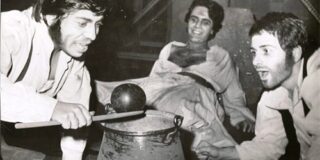
Οι περισσότεροι από εμάς γνωρίζουμε και θαυμάζουμε τον Αχιλλέα Δρούγκα κυρίως ως ζωγράφο. Λιγότερο γνωστό στο κοινό,είναι το γεγονός ότι η καλλιτεχνική του αφετηρία βρίσκεται στη χαρακτική, και μάλιστα σε μια περίοδο μαθητείας, πειραματισμού και πρώιμης καταξίωσης που φωτίζει ουσιαστικά τη συνολική του δημιουργική πορεία.
Το 1959, όταν εισήχθη στην Α.Σ.Κ.Τ. εντάχθηκε στο εργαστήρι του Κώστα Γραμματόπουλου (1916-2003), ο οποίος ήδη τότε είχε αποκτήσει σχεδόν μυθικό κύρος στον χώρο της ελληνικής χαρακτικής. Ο Γραμματόπουλος είχε συνδέσει το όνομά του με μερικές από τις γνωστότερες πατριωτικές αφίσες της περιόδου του Ελληνοϊταλικού πολέμου, όπως οι περίφημες Ηρωίδες του 1940 με τις Ελληνίδες στην Πίνδο, το Έλα να τα πάρης με τον Έλληνα στρατιώτη εφ’ όπλου λόγχη και το Εμπρός της Ελλάδος παιδιά, μεταξύ άλλων.Τον θυμόμαστε ακόμη από την εικονογράφηση της σειράς Κλασσικά Εικονογραφημένα, με την οποία μεγαλώσαμε οι παλαιότεροι,από τα αλφαβητάρια της Α’ Δημοτικού και,βεβαίως, το σημερινό εθνόσημο της Ελληνικής Δημοκρατίας μετά το 1974.[1]
Έναν χρόνο αργότερα, το 1960, ο Δρούγκας εγγράφεται επίσης στο νεοσύστατο εργαστήρι σκηνογραφίας της ΑΣΚΤ,όπου παρακολούθησε σκηνογραφία, ενδυματολογία και διακοσμητική με καθηγητή τον Βασίλη Βασιλειάδη (1927-1991), μια προσωπικότητα που ο Γιάννης Τσαρούχης είχε περιγράψει ως «…καλλιτεχνική ιδιοφυΐα με σπάνια σχεδιαστικά χαρίσματα και έμφυτον αίσθημα διακοσμητικής». Η διπλή μαθητεία, στη χαρακτική και στη σκηνογραφική σύλληψη του χώρου, δεν υπήρξε τυχαία, αντιθέτως, προϊδεάζει για τη μετέπειτα ιδιοτυπία του έργου του, όπου η εικόνα δεν είναι ποτέ απλή αναπαράσταση αλλά οργανωμένος τόπος εσωτερικών εντάσεων, συμβόλων και σκηνικής παρουσίας.
Έως το 1970, οπότε εγκαταστάθηκε στο Λονδίνο, με υποτροφία του Ιδρύματος Κρατικών Υποτροφιών (ΙΚΥ) για να σπουδάσει λιθογραφία στο Slade School of Fine Art υπό την καθοδήγηση των Anthony Gross (1905-1984)[2] και Bartolomeu dos Santos (1931-2008)[3], ο Δρούγκας είχε ήδη αρχίσει να κτίζει μια αξιοσημείωτη διεθνή πορεία. Συμμετείχε σε διεθνείς εκθέσεις χαρακτικής στο Λουγκάνο (1968), στην Μπιενάλε Αλεξάνδρειας(1968), στη Γενεύη (1969), στη Μπιενάλε Λιουμπλιάνας(1969), ενώ το Μουσείο Μοντέρνας Τέχνης της Νέας Υόρκης (ΜοΜΑ) απέκτησε μία από τις ξυλογραφίες του. Η διαδρομή αυτή φανερώνει ήδη την αναγνώριση ενός νεαρού χαράκτη με ξεχωριστή εικαστική ταυτότητα.
Η παραμονή του στο Λονδίνο την περίοδο 1970-1974 αποδείχτηκε καθοριστική. Στο Λονδίνο η πρωτοτυπία της χαρακτικής του κέρδισε ευρύτερη αναγνώριση,οδηγώντας σε συνεργασίες με την Redfern Gallery και την Christie’s Contemporary Art, οι οποίοι προώθησαν τα χαρακτικά του έργα μέσω των Sunday Times. Το 1973 η Alecto Editions,σε συνεργασία με την Tate Gallery του Λονδίνου,άρχισε να του παραγγέλνει χαλκογραφίες, εξέδωσε μονογραφία με κείμενα του Charles Spencer και ενίσχυσε περαιτέρω τη διεθνή του προβολή. Ως αποτέλεσμα, έργα του εντάχθηκαν σε σημαντικές συλλογές στην Ευρώπη και την Αμερική, όπως το Victoria and Albert Museum, National Museum, η British Government Art Collection, η Graves Art Gallery, η Bibliothèque nationale de France, το Portland Museum of Art, το National Museum of Wales, το Buffalo AKG Art Museum κ.ά.[4]
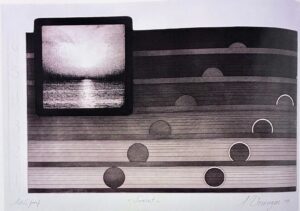
Επιστρέφοντας στην Αθήνα το 1974, μετά την πτώση της δικτατορίας, ο Δρούγκας πραγματοποίησε ατομική έκθεση χαρακτικών στη γκαλερί Ιόλα – Ζουμπουλάκη. Η αναγνώριση του έργου του επισφραγίστηκε περαιτέρω με δύο υποτροφίες Ford, το 1975 και το 1976, για παραμονή στις ΗΠΑ. Ωστόσο, η οριστική επάνοδός του στην Αθήνα σηματοδότησε μια ουσιώδη στροφή στο έργο του: τη μετάβαση από τη χαρακτική στη ζωγραφική, μέσα από την οποία το όνομά του θα γινόταν ευρύτερα γνωστό. Κομβική στιγμή αυτής της νέας φάσης υπήρξε το 1982, όταν ο συλλέκτης Δάκης Ιωάννου του ανέθεσε μια μνημειακή επιτοίχια σύνθεση 45 μέτρων για τη διακόσμηση του Café Pergola στο ξενοδοχείο Athenaeum InterContinental, στην οποία, με τη γνώριμη ποιητική και συμβολική του γλώσσα, απεικόνισε τον αιώνιο κύκλο του χρόνου, από την ημέρα στη νύχτα, και την αίσθηση του απείρου του χώρου.
Ωστόσο, το χαρακτικό του έργο, λιγότερο γνωστό αλλά εξίσου σημαντικό, αξίζει να ιδωθεί ως ένα αυτόνομο κεφάλαιο της δημιουργίας του. Έως τη μεγάλη αναδρομική έκθεση στην Εθνική Πινακοθήκη το 2009, αυτή η πτυχή του έργου του Δρούγκα παρέμενε σχετικά άγνωστη. Σήμερα γνωρίζουμε ότι το συνολικό corpus των χαρακτικών του αριθμεί είκοσι πέντε έργα: είκοσι ένα δημιουργήθηκαν στο Λονδίνο μεταξύ 1970 και 1973, και τέσσερα στην Αθήνα μεταξύ 1975 και 1980.
Το Λονδίνο στις αρχές της δεκαετίας του 1970 υπήρξε για τον Δρούγκα ένας τόπος έντονης αισθητικής και ιδεολογικής ζύμωσης, ριζικά διαφορετικός από την Αθήνα, που βίωνε τη στείρα στρατιωτική αισθητική του καθεστώτος των Συνταγματαρχών.Μέσα σ’ αυτό το νέο διεθνιστικό περιβάλλον, ο Δρούγκας ανέπτυξε μια εικαστική γλώσσα που κινείται ανάμεσα στο ονειρικό, το συμβολικό, το υπαινικτικά πολιτικό και το υπαρξιακό. Αρκεί να εξετάσει κανείς τους τίτλους ορισμένων έργων: Τομή I, Τομή II, Μανεκέν, Σταυρός, Spectrum, Cosmic, Τώρα είσαι ένας T.V. Star, Καθρέπτης, Πλησίασμα, Πού θα πάω;, Ηλιοβασίλεμα, Μέτρο Κατανόησης, Τιμή στον Caravaggio, Πόλις υπό Πολιορκίαν, Αίσθηση Οσμής. Αυτοί οι τίτλοι από μόνοι τους χαρτογραφούν έναν κόσμο ανησυχιών που δεν υπακούει σε μία και μόνη θεματολογία, αλλά συνθέτει ένα πολυφωνικό και σύνθετο σύμπαν.
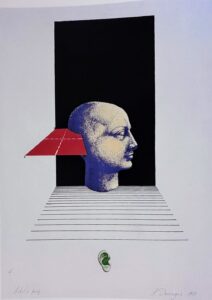
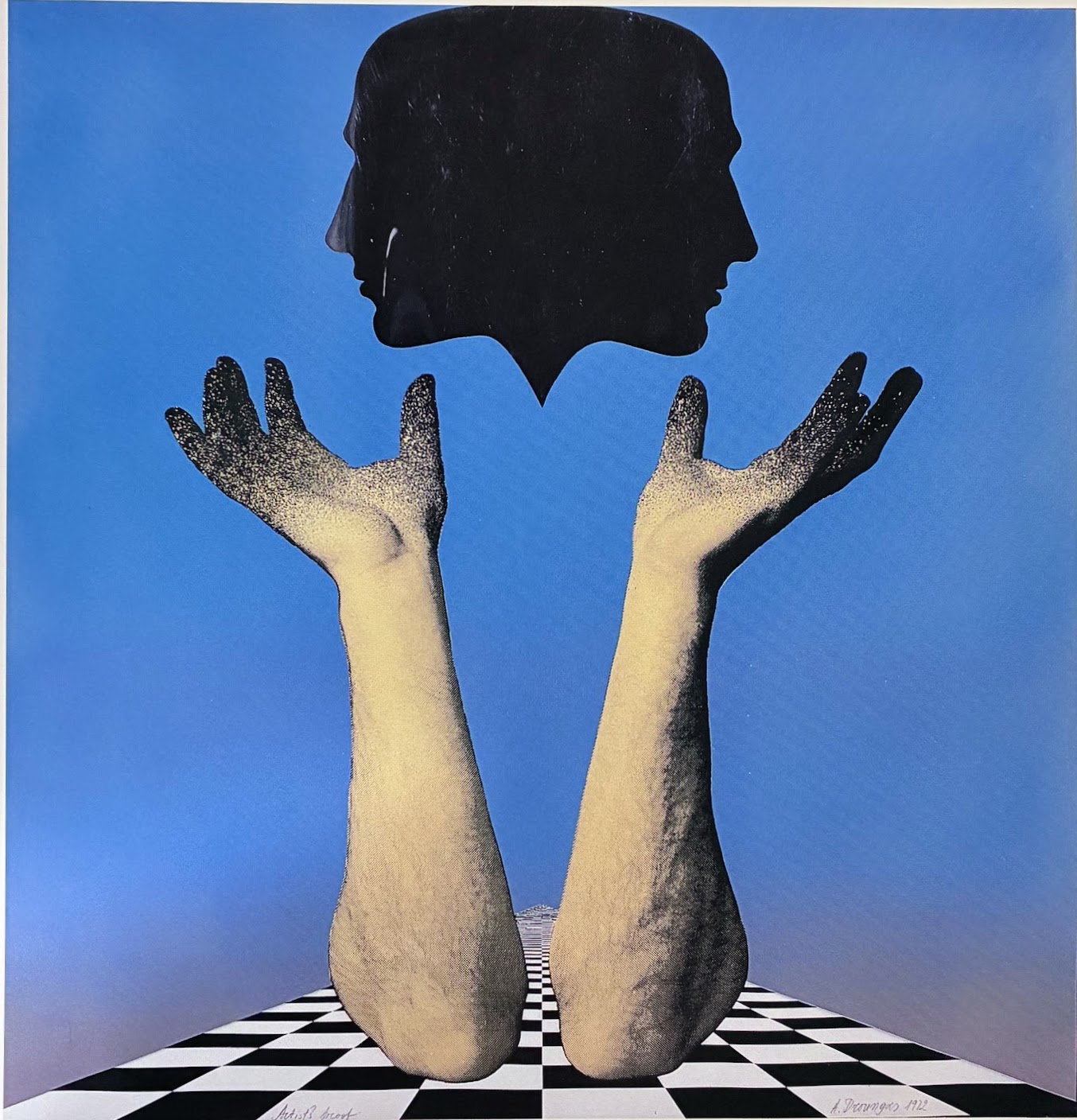
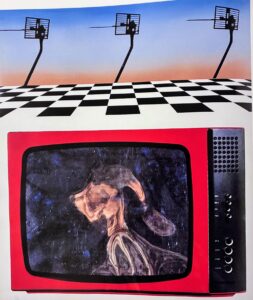
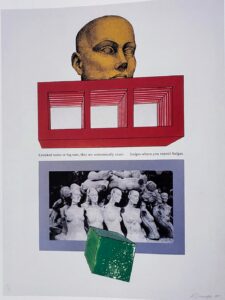
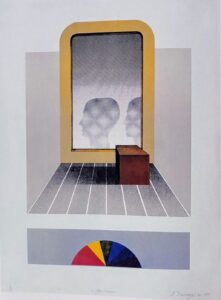
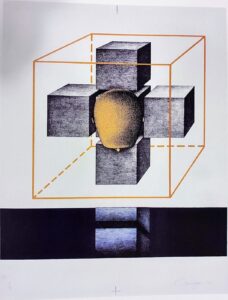
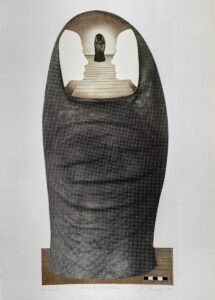
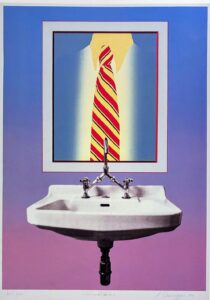
Ιδιαίτερο ενδιαφέρον παρουσιάζουν οι Τομές, όπου ήδη από τον τίτλο προβάλλει η πρόθεση μιας διεισδυτικής, σχεδόν ανατομικής προσέγγισης του ορατού. Η «Τομή» δεν σημαίνει απλώς τη διάσπαση της μορφής, αλλά μια πράξη γνώσης, μια αποκάλυψη εσωτερικών ρηγμάτων. Στο Μανεκέν, αντιθέτως, ο Δρούγκας μοιάζει να σχολιάζει την αποξένωση του σύγχρονου ανθρώπου: μια ανθρωποειδής μορφή χωρίς εσωτερικότητα, ένα σώμα-κέλυφος φτιαγμένο για να επιδεικνύεται παρά να υπάρχει. Στον Καθρέπτη, όπως και στο ειρωνικά οξυδερκές Τώρα είσαι ένας T.V. Star, το βλέμμα στρέφεται προς τον κόσμο της αντανάκλασης, της δημόσιας εικόνας, της μαζικής προβολής. Εδώ ο καλλιτέχνης φαίνεται να διαισθάνεται ήδη από τότε τη μετάλλαξη του ατόμου σε θέαμα, της εμπειρίας σε εικόνα προς κατανάλωση.
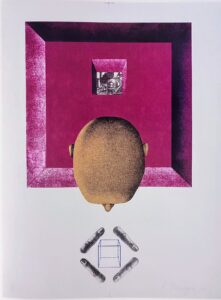
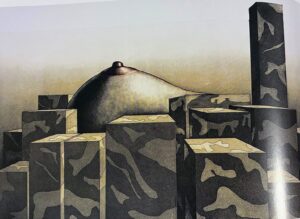
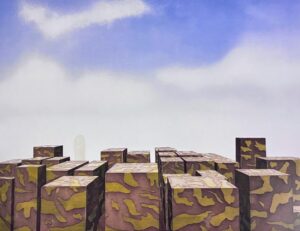
Με διαφορετικό αλλά εξίσου ουσιαστικό τρόπο, το Πού θα πάω; συμπυκνώνει ένα υπαρξιακό ερώτημα προσανατολισμού, ενώ το Μέτρο Κατανόησης αγγίζει σχεδόν φιλοσοφικά τα όρια της γνώσης και της αντίληψής μας για τον κόσμο. Τέλος, στα έργα Πόλις υπό Πολιορκίαν η προσωπική και η ιστορική διάσταση φαίνεται να συγχωνεύονται δραματικά: η πόλη εδώ δεν είναι απλώς ένας τόπος, αλλά ένας χώρος συλλογικής συνείδησης, ιστορίας, πίεσης και δοκιμασίας.
Εξίσου εντυπωσιακή είναι η ποικιλία των τεχνικών: λιθογραφίες, έγχρωμες λιθογραφίες, μεταξοτυπίες, μεταξοτυπίες σε PVC, χαλκογραφίες και ακουατίντες. Η επιλογή αυτών των μέσων αποκαλύπτει έναν καλλιτέχνη που αντιλαμβάνεται τη χαρακτική όχι ως δευτερεύουσα ή αναπαραγωγική διαδικασία, αλλά ως αυτόνομο πεδίο πειραματισμού. Η λιθογραφία υπηρετεί συχνά τη σαφήνεια της δομής, η μεταξοτυπία εντείνει τον παλμό της σύγχρονης εικόνας, ενώ η χαλκογραφία και η ακουατίντα προσδίδουν μεγαλύτερη τονική πυκνότητα και στοχαστικό βάθος.
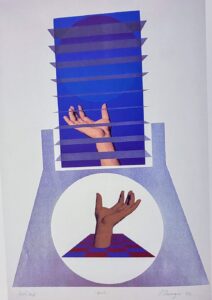
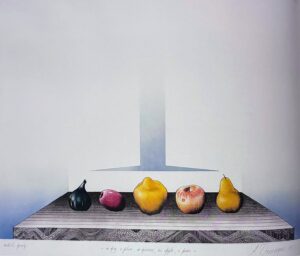
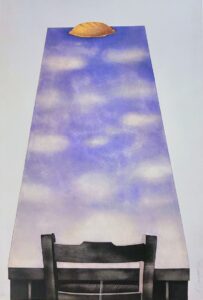
Αποκαλυπτική είναι και η τυπολογία των τίτλων. Δίπλα σε έργα σχεδόν αφηρημένου ή εννοιολογικού προσανατολισμού, όπως οι Τομές ή το Μέτρο Κατανόησης, συναντά κανείς έργα με κοσμολογικούς και μεταφυσικούς συνειρμούς, όπως το Cosmic και το Spectrum, αλλά και έργα που συνομιλούν με την καθημερινότητα, τη μνήμη, την επιθυμία και τη μαζική κουλτούρα. Ταυτόχρονα, εμφανίζονται άνθη, καρποί, οικιακά αντικείμενα και αστικά στοιχεία, όπως Αρωματικά Τριαντάφυλλα, Ένα Σύκο, ένα Δαμάσκηνο, ένα Κυδώνι, ένα Μήλο, ένα Αχλάδι, Τραπέζι, Ευρωπαϊκός Νιπτήρας, που δεν λειτουργούν περιγραφικά, αλλά ως φορείς συμβολισμού και εσωτερικής έντασης.
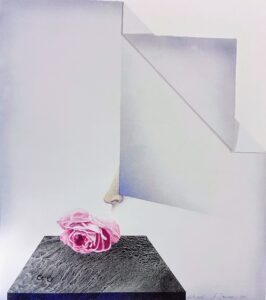
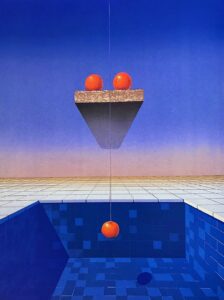
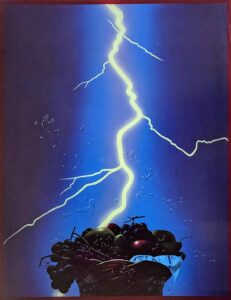
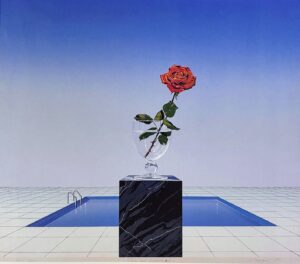
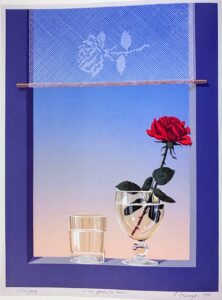
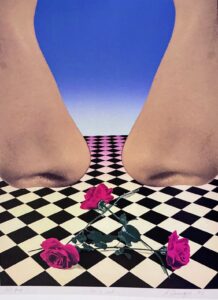
Η μετάβαση από τη λονδρέζικη στην αθηναϊκή περίοδο έχει επίσης το δικό της βάρος. Τα τέσσερα έργα της Αθήνας, Αγάπη για τρία Πορτοκάλια, Τριαντάφυλλα και Πισίνα, Δύο Ποτήρια, Δύο Τριαντάφυλλα, Αστραπή, σηματοδοτούν μια νέα ισορροπία. Αν τα έργα του Λονδίνου φέρουν την ένταση μιας καλλιτεχνικής συγκρότησης που διαμορφώθηκε μέσα σε ένα διεθνές και συχνά ανήσυχο περιβάλλον, τα έργα της Αθήνας μεταπλάθουν αυτή την εμπειρία σε εικόνες πιο συμπυκνωμένες, πιο καθαρές, αλλά όχι λιγότερο πολυσήμαντες. Το άνθος, το ποτήρι, η πισίνα, το πορτοκάλι, η αστραπή δεν είναι απλώς μοτίβα αλλά σημεία μιας ποιητικής, αισθησιακής και υπαινικτικής γλώσσας.
Σημαντικό χαρακτηριστικό της ενότητας αυτής είναι και το γεγονός ότι αρκετά έργα σώζονται ως δοκίμια του καλλιτέχνη (artist’ sproofs), ενώ άλλα φέρουν αριθμημένες εκδόσεις. Αυτό έχει ιδιαίτερη σημασία τόσο για την ιστορία του έργου όσο και για την κατανόηση της ίδιας της δημιουργικής διαδικασίας: το δοκίμιο διατηρεί την αμεσότητα της χειρονομίας, τη στενή σχέση του τυπώματος με την προσωπική επίβλεψη και την ευθύνη του δημιουργού.
Όλα αυτά καθιστούν σαφές ότι ο Αχιλλέας Δρούγκας δεν είναι απλώς ένας σημαντικός ζωγράφος που ασχολήθηκε κάποτε με τη χαρακτική. Υπήρξε χαράκτης με ουσιαστική εικαστική σκέψη, με διεθνή παρουσία και με έργο που αξίζει να εκτιμηθεί όχι ως προοίμιο, αλλά ως ολοκληρωμένο και αυτόνομο επίτευγμα. Στα χαρακτικά του, η μορφή δεν είναι ποτέ απλό περίβλημα· είναι ένας τόπος έντασης, μνήμης, συμβολισμού και υπαρξιακής αναζήτησης. Από το Λονδίνο ως την Αθήνα, από την τομή ως το λουλούδι, από τον καθρέπτη ως την πολιορκημένη πόλη, ο Δρούγκας οικοδομεί ένα εικαστικό σύμπαν στο οποίο η ποίηση, η σκέψη και η οξύτητα του βλέμματος συνυφαίνονται με σπάνια συνέπεια.
Γιάννης Κολοκοτρώνης
Καθηγητής Ιστορίας και Θεωρίας της Δυτικής Τέχνης Τμήμα Αρχιτεκτόνων Μηχανικών / Δ.Π.Θ.
Yannis Kolokotronis, Achilleas Droungas: The Printmaker
Most of us know and admire Achilleas Droungas primarily as a painter. Much less widely known, however, is the fact that his artistic beginnings lie in printmaking, and indeed in a period of apprenticeship, experimentation, and early recognition that sheds important light on the overall trajectory of his creative development.
In 1959, when he entered the Athens School of Fine Arts, he joined the workshop of Kostas Grammatopoulos (1916–2003), who had already acquired an almost legendary stature in the field of Greek printmaking. Grammatopoulos had associated his name with some of the best-known patriotic posters of the Greco-Italian War period, among them the celebrated Heroines of 1940, depicting the women of Pindus, Come and Get Them, with the Greek soldier standing ready with fixed bayonet, and Forward, Children of Greece, among others. He is also remembered for illustrating the Classics Illustrated series, with which older generations grew up, for primary-school alphabet books, and, of course, for the current emblem of the Hellenic Republic after 1974.
A year later, in 1960, Droungas also enrolled in the newly established stage design workshop at the Athens School of Fine Arts, where he studied stage design, costume, and decorative arts under Vassilis Vassiliadis (1927–1991), a figure whom Yannis Tsarouchis described as “an artistic genius with rare draughtsmanship and an innate sense of decoration.” This dual apprenticeship, in printmaking and in the scenographic conception of space, was by no means accidental; on the contrary, it seems to foreshadow the later distinctiveness of his work, in which the image is never mere representation but an organised site of inner tensions, symbols, and theatrical presence.
By 1970, when he settled in London on a scholarship from the Greek State Scholarships Foundation (IKY) to study lithography at the Slade School of Fine Art under the guidance of Anthony Gross (1905–1984) and Bartolomeu dos Santos (1931–2008), Droungas had already begun to establish a remarkable international presence. He participated in international print exhibitions in Lugano (1968), the Alexandria Biennale (1968), Geneva (1969), and the Ljubljana Biennale (1969), while the Museum of Modern Art in New York (MoMA) acquired one of his woodcuts. This trajectory already points to the recognition of a young printmaker with a distinctive artistic identity.
His stay in London from 1970 to 1974 proved decisive. There, the singularity of his printmaking gained broader recognition, leading to collaborations with the Redfern Gallery and Christie’s Contemporary Art, which promoted his prints through The Sunday Times. In 1973, Alecto Editions, in collaboration with the Tate Gallery in London, began commissioning etchings from him, published a monograph with texts by Charles Spencer, and further enhanced his international visibility. As a result, his works entered major collections in Europe and America, including the Victoria and Albert Museum, the British Government Art Collection, Graves Art Gallery, the Bibliothèque nationale de France, the Portland Museum of Art, the National Museum of Wales, and the Buffalo AKG Art Museum, among others.
Returning to Athens in 1974, after the fall of the dictatorship, Droungas held a solo exhibition of prints at the Iolas-Zoumboulakis Gallery. Recognition of his work was further confirmed by two Ford Foundation fellowships, in 1975 and 1976, which enabled him to remain in the United States. Yet his definitive return to Athens marked a significant shift in his work: the transition from printmaking to painting, through which his name would become more widely known. A pivotal moment in this new phase came in 1982, when the collector Dakis Ioannou commissioned from him a monumental wall composition measuring 45 metres in length for the Café Pergola at the Athenaeum InterContinental Hotel. In this work, through his characteristic poetic and symbolic language, he depicted the eternal cycle of time, from day to night, and the sense of the infinity of space.
And yet his work in printmaking, less widely known but equally important, deserves to be seen as an autonomous chapter in his oeuvre. Until the major retrospective at the National Gallery in 2009, this aspect of Droungas’s work remained relatively little known. Today we know that the complete corpus of his prints comprises twenty-five works: twenty-one created in London between 1970 and 1973, and four in Athens between 1975 and 1980.
For Droungas, London in the early 1970s was a site of intense aesthetic and ideological ferment, radically different from Athens, which was still living under the sterile military aesthetic of the Colonels’ regime. Within this new internationalist environment, he developed a visual language moving between the dreamlike, the symbolic, the obliquely political, and the existential. One need only consider the titles of certain works: Section I, Section II, Mannequin, Cross, Spectrum, Cosmic, Now You Are a T.V. Star, Mirror, Approach, Where Shall I Go?, Sunset, Measure of Understanding, Homage to Caravaggio, City Under Siege, Sense of Smell. These titles alone map out a world of concerns that does not submit to a single thematic axis but instead composes a polyphonic and complex universe.
Particular interest attaches to the Sections, where the title itself already suggests an intention towards a penetrating, almost anatomical approach to the visible. “Section” signifies not merely the fragmentation of form, but an act of knowledge, a revelation of inner fissures. In Mannequin, by contrast, Droungas seems to comment on the alienation of modern man: a humanoid form devoid of interiority, a shell-body made to be displayed rather than to exist. In Mirror, as in the ironically incisive Now You Are a T.V. Star, the gaze turns towards the world of reflection, public image, and mass projection. Here the artist already seems to sense the transformation of the individual into spectacle, of experience into an image for consumption.
In a different yet equally substantial way, Where Shall I Go? condenses an existential question of orientation, while Measure of Understanding approaches, almost philosophically, the limits of knowledge and of our perception of the world. Finally, in the works City Under Siege, the personal and historical dimensions appear to merge dramatically: the city here is not merely a place, but a space of collective consciousness, history, pressure, and ordeal.
Equally striking is the variety of techniques: lithographs, colour lithographs, screenprints, screenprints on PVC, etchings, and aquatints. The choice of these media reveals an artist who understood printmaking not as a secondary or reproductive process, but as an autonomous field of experimentation. Lithography often serves the clarity of structure; screenprinting intensifies the pulse of the contemporary image; while etching and aquatint lend greater tonal density and contemplative depth.
The typology of the titles is equally revealing. Alongside works of an almost abstract or conceptual orientation, such as the Sections or Measure of Understanding, one encounters works with cosmological and metaphysical resonances, such as Cosmic and Spectrum, as well as works that engage with everyday life, memory, desire, and mass culture. At the same time, flowers, fruits, domestic objects, and urban elements appear — such as Fragrant Roses, A Fig, a Plum, a Quince, an Apple, a Pear, Table, European Sink — which do not function descriptively, but as bearers of symbolism and inner tension.
The transition from the London to the Athens period also carries its own significance. The four works from Athens — Love for Three Oranges, Roses and Pool, Two Glasses, Two Roses, Lightning — mark a new equilibrium. If the London works bear the intensity of an artistic formation shaped within an international and often restless environment, the Athens works transform that experience into images more condensed, more lucid, yet no less multivalent. The flower, the glass, the pool, the orange, and the lightning bolt are not merely motifs, but signs of a poetic language at once sensual and allusive.
Another important feature of this body of work is the fact that several works survive as artist’s proofs, while others bear numbered editions. This is of particular significance both for the history of the work and for understanding the creative process itself: the proof preserves the immediacy of the gesture, the close relationship of the print to the artist’s personal supervision and responsibility.
All this makes clear that Achilleas Droungas was not merely an important painter who at one point turned to printmaking. He was a printmaker of genuine artistic and intellectual substance, with an international presence and a body of work that deserves to be valued not as a prelude, but as a complete and autonomous achievement. In his prints, form is never a mere outer shell; it is a site of tension, memory, symbolism, and existential inquiry. From London to Athens, from the section to the flower, from the mirror to the besieged city, Droungas constructs a visual universe in which poetry, thought, and acuity of vision are interwoven with rare consistency.
Yannis Kolokotronis
Professor of History and Theory of Western Art Department of Architecture / Democritus University of Thrace